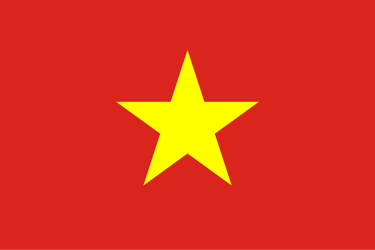
Vietnam Steps Up Global Diplomacy With Major September Tour
Planned visits to Russia, France, the United States and Canada highlight Vietnam’s effort to protect its economic interests while maintaining strong relations with competing global powers.


Vietnam is entering September 2026 with one of the busiest periods of high-level diplomacy in its recent history, as President and Communist Party General Secretary Tô Lâm prepares for a sequence of visits across several major political and economic centers. The planned itinerary (lịch trình) is expected to take him first to Russia, then France, followed later by the United States and Canada. The schedule is unusually dense even for a leader who has travelled extensively since taking the top position in the Communist Party. Although the visits had not all been formally announced as of September 4 and could still change, their geographic range provides a clear indication of Hanoi’s foreign-policy priorities.
The diplomatic activity comes at a time when Vietnam is trying to protect the growth model that has transformed it into one of Asia’s most important manufacturing and trading economies. Factories across the country produce electronics, garments, footwear, machinery and numerous other products for markets around the world, making external demand crucial to domestic growth. That success has also made Vietnam highly export-reliant (phụ thuộc vào xuất khẩu), leaving the economy exposed when major trading partners change tariffs, import rules or industrial policies. For Hanoi, stronger political relationships can therefore serve a practical economic purpose by helping to keep markets open, attract investment and reduce the risks associated with sudden changes in global trade.
Vietnam’s approach is not based on choosing one powerful ally and turning away from others. Instead, the country has developed important relationships with states that may themselves be strategic competitors, including China, the United States, Russia, Japan, Australia and major European countries. This allows Hanoi to cooperate with different partners in trade, technology, infrastructure, energy and security while maintaining substantial freedom in its foreign policy. The principle of diversification (đa dạng hóa) is central to an approach intended to give Vietnam greater room for maneuver and reduce excessive dependence on any single international partner.
Russia is expected to be the first major stop, with Reuters reporting that Tô Lâm is due to begin his visit on September 7 and meet President Vladimir Putin. The trip reflects a long-standing rapprochement (sự xích lại gần nhau) supported by decades of political, educational, military and economic connections between Vietnam and the former Soviet Union and, subsequently, the Russian Federation. Russia continues to be important to Vietnam in fields that differ from many of Hanoi’s Western partnerships, particularly energy and defense. At the same time, Vietnam has been developing relations with a much wider group of countries, meaning that close connections with Moscow form only one part of an increasingly broad diplomatic network.
Energy is likely to remain one of the most consequential areas in relations between Vietnam and Russia. Vietnam’s rapidly expanding industrial sector requires enormous quantities of reliable electricity, while rising living standards and growing cities are also pushing national energy demand higher. The return to nuclear power (điện hạt nhân) has consequently become part of Vietnam’s longer-term effort to increase electricity generation and strengthen energy security. In March 2026, Russia and Vietnam signed an intergovernmental cooperation agreement concerning the Ninh Thuận 1 nuclear power plant, which is planned to contain two Russian-designed units with a combined capacity of 2,400 megawatts.
Defense is another sensitive but historically important component of Vietnam-Russia relations. Russian and Soviet equipment has played a major role in Vietnam’s armed forces, creating long-term requirements for maintenance, training, spare parts and technical expertise. Vietnam has nevertheless been exploring cooperation with a wider selection of international partners as it modernizes its forces and seeks access to newer technologies. This gradual evolution in defense procurement (mua sắm quốc phòng) is consistent with Vietnam’s broader preference for maintaining several useful partnerships instead of allowing one foreign country to dominate an important strategic field.
After Russia, Tô Lâm is expected to travel to France, where a meeting with President Emmanuel Macron has been reported. Cooperation in aerospace (hàng không vũ trụ) is expected to receive particular attention, with Tô Lâm reportedly planning to attend an international space summit in Paris on September 9 and 10. The visit comes as the two countries work to translate their Comprehensive Strategic Partnership into more concrete cooperation in science, technology, energy and major development projects. France is particularly significant in Vietnam’s European diplomacy because it became the country’s first Comprehensive Strategic Partner within the European Union.
French businesses have been looking closely at opportunities created by Vietnam’s rapid modernization and growing demand for advanced technology. Cooperation between the two countries already covers areas ranging from science and innovation to energy, aviation and transport. Vietnamese and French officials have identified major infrastructure (cơ sở hạ tầng) projects, civil nuclear energy, technological innovation and scientific cooperation as sectors in which they want to accelerate practical collaboration. Greater French involvement could give Vietnam access to additional expertise and investment while strengthening the country’s economic links with the wider European market.
The United States portion of the planned journey has a different character because it combines global diplomacy with one of Vietnam’s most important economic relationships. Tô Lâm is expected to travel to New York during the high-level period of the United Nations General Assembly beginning in the week of September 21. Appearing at the UN gives Vietnam an opportunity to present itself not only as a fast-growing Southeast Asian manufacturing economy but also as a country seeking a greater voice in international institutions. The UN visit therefore reflects Vietnam’s increasingly multilateral (đa phương) approach, in which participation in international organizations complements direct relations with individual countries.
Economic relations with Washington remain essential but have also become increasingly complicated. The size of the trade imbalance (mất cân bằng thương mại) between the two economies has become an important political issue in the United States, where the Trump administration has placed considerable emphasis on reducing large trade deficits. American demand has helped fuel the development of Vietnamese factories and international supply chains, making continued access to the U.S. market particularly important for Vietnam. U.S. data for July 2026 showed record American goods trade deficits with several Asian economies, including Vietnam, despite Washington’s use of tariffs intended to reshape global trade patterns.
This creates a difficult balancing problem for Hanoi. Vietnam wants to preserve access to the enormous American consumer market while continuing to attract international businesses that view the country as a competitive manufacturing base in Asia. Higher U.S. tariffs (thuế quan) or stricter trade rules could affect Vietnamese exporters, foreign manufacturers operating in the country and workers whose employment depends on international supply chains. Political dialogue with Washington is therefore closely linked to economic policy, even when a presidential trip is formally centered on participation in the United Nations rather than direct trade negotiations.
Vietnam’s network of partnerships is frequently discussed through the concept of “bamboo diplomacy,” an image associated with remaining firmly rooted while retaining enough flexibility to respond to changing circumstances. Vietnam can maintain close economic ties with China, a Comprehensive Strategic Partnership with the United States, long-standing relations with Russia and increasingly extensive cooperation with countries such as France and Australia at the same time. This approach is not simply about diplomatic symbolism, because multiple partnerships can help protect access to markets, technology, investment, energy and security cooperation. In international-relations terms, this type of geopolitical hedging (chiến lược phòng ngừa rủi ro địa chính trị) can reduce the danger that deterioration in one relationship will leave a country with too few alternatives.
Vietnamese leaders increasingly present national independence as a foundation of the country’s foreign relations. In describing Vietnam’s foreign-policy direction in 2026, Tô Lâm emphasized independence, self-reliance (tự lực), peace and the protection of national interests while simultaneously supporting extensive international integration. These ideas are not necessarily contradictory in Vietnamese policy thinking, because international cooperation can be used to build domestic economic and technological capacity rather than replace it. The same principle can be seen in efforts to diversify trade, develop local industry, secure additional energy supplies and acquire advanced technology from a wide range of foreign partners.
The September diplomatic schedule also follows Tô Lâm’s visit to Australia in August, where the two countries expanded cooperation in defense, agriculture, border security, critical minerals, semiconductors, clean energy and supply chains. Such meetings demonstrate how closely Vietnam now connects international relations with its plans for economic modernization and technological development. A more complicated geopolitical (địa chính trị) environment shaped by competition among major powers, disputes over trade and uncertainty in international energy markets makes that diplomacy increasingly important. Vietnam has benefited enormously from globalization, but it must also manage the risks that appear when the large economies and political powers with which it cooperates disagree with one another.
Canada is expected to be the final stop of the September journey, with the visit reportedly beginning on September 24 after Tô Lâm leaves the United States. Although Canada is a smaller economic partner than China or the United States, the two countries already have a Comprehensive Partnership and both participate in the Comprehensive and Progressive Agreement for Trans-Pacific Partnership, or CPTPP. Vietnam is Canada’s largest trading partner within ASEAN, while the two governments have recently discussed expanding cooperation in areas including energy, aerospace, transportation and agriculture. The relationship is another example of economic interdependence (sự phụ thuộc lẫn nhau) through which Vietnam can broaden its access to markets and investment while foreign partners develop a greater stake in Vietnam’s continued economic growth.
Taken together, the planned visits are more significant than a series of ceremonial meetings by one Vietnamese leader. The central alignment (sự liên kết) of Vietnam’s diplomacy is not with a single geopolitical camp but with the country’s own objective of maintaining stability, economic growth and strategic independence. Russia offers long-established energy and defense links, France provides important European connections and technological cooperation, the United States remains a vital export market, and Canada provides another avenue for trade diversification. For Vietnamese learners and people considering living, studying or working in Vietnam, understanding this balancing strategy provides useful context for many of the economic and political developments likely to shape the country in the coming years.
Key Vietnamese Vocabulary
lịch trình itinerary
phụ thuộc vào xuất khẩu export-reliant
đa dạng hóa diversification
sự xích lại gần nhau rapprochement
điện hạt nhân nuclear power
mua sắm quốc phòng defense procurement
hàng không vũ trụ aerospace
cơ sở hạ tầng infrastructure
đa phương multilateral
mất cân bằng thương mại trade imbalance
thuế quan tariffs
chiến lược phòng ngừa rủi ro địa chính trị geopolitical hedging
tự lực self-reliance
địa chính trị geopolitical
sự phụ thuộc lẫn nhau interdependence
sự liên kết alignment
For requests or suggestions: pr@learntiengviet.org


Learn the official language of Vietnam in 30 days thanks to the most complete Grammar, Vocabulary and Culture courses available.
Start speaking today!
© 2026 All rights reserved
Land of Living Traditions!


